Designing Onboarding for Better Employee Retention
An end-to-end employee journey design for a live consulting firm. It covers recruitment, onboarding, task management, and performance development. Built from stakeholder interviews and delivered as a costed, implementation-ready system.
My Role: Business Design Consultant
The Problem
A training consultancy facing high demand but limited ability to scale due to internal inefficiencies. Despite strong client inflow, the organisation struggled to retain employees long enough for them to contribute meaningfully.
Onboarding was informal, role expectations were unclear, and there was no structured system for learning how the company functioned. New hires entered without context, felt disconnected, and exited early — making growth dependent on the founder’s bandwidth rather than a scalable system.
The Process
I followed the Double Diamond framework to structure the process.
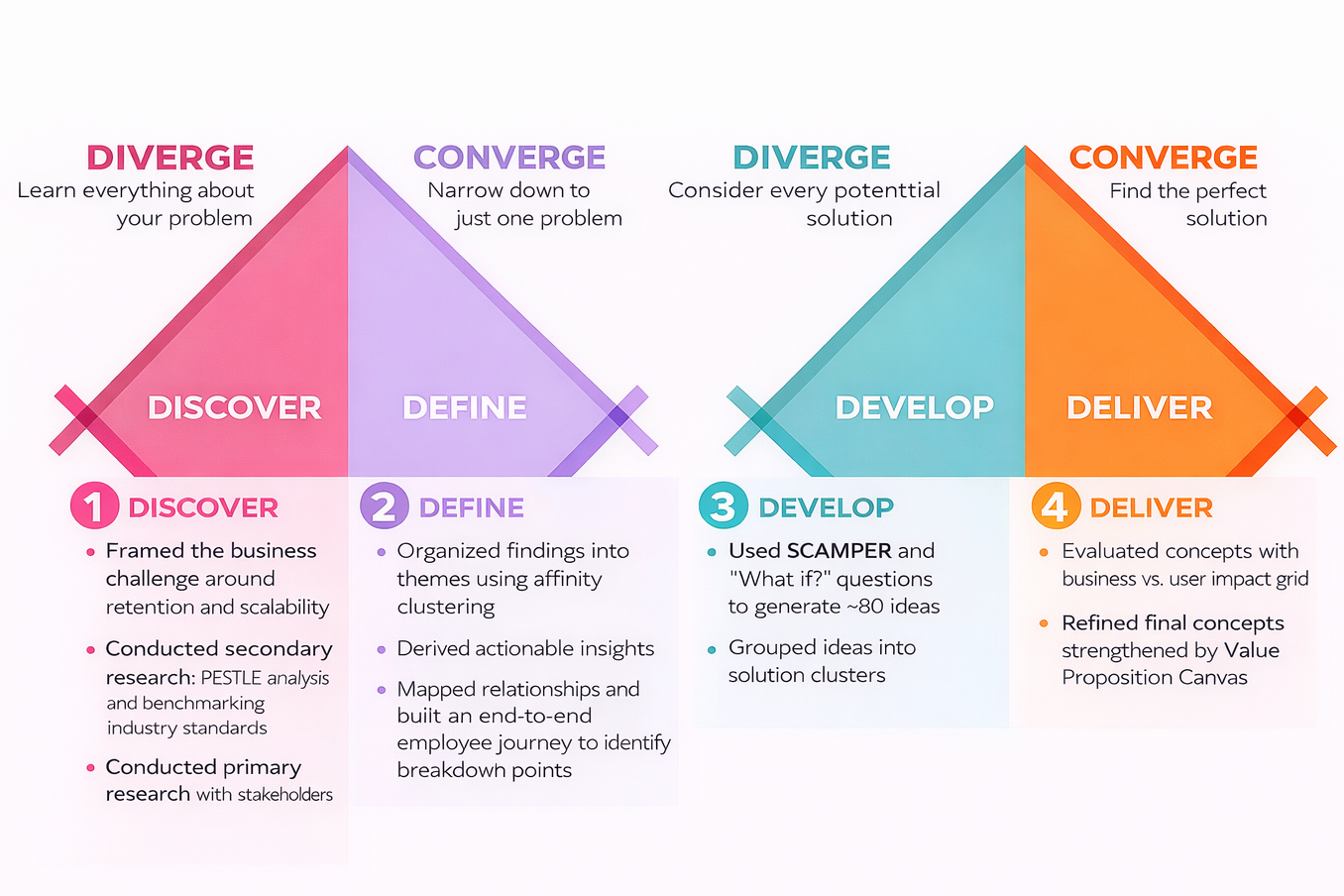
1. Discover phase: I framed the business challenge around retention and scalability, supported by secondary research including PESTLE analysis and benchmarking industry standards to understand how similar organisations structured hiring, onboarding, and internal systems. I also conducted primary research through 10+ interviews with current and former employees, independent trainers, HR heads at client companies, and external HR experts.
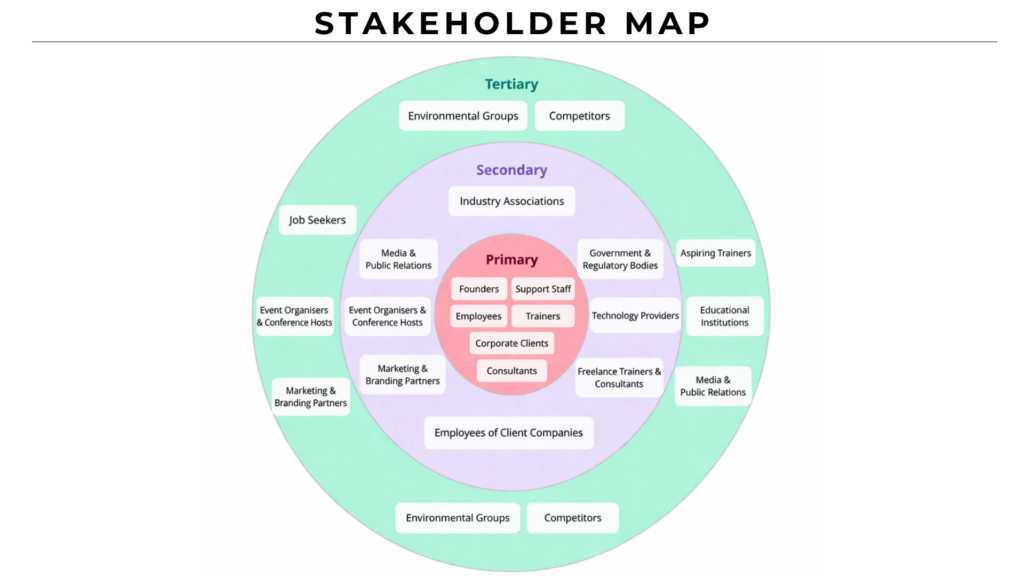
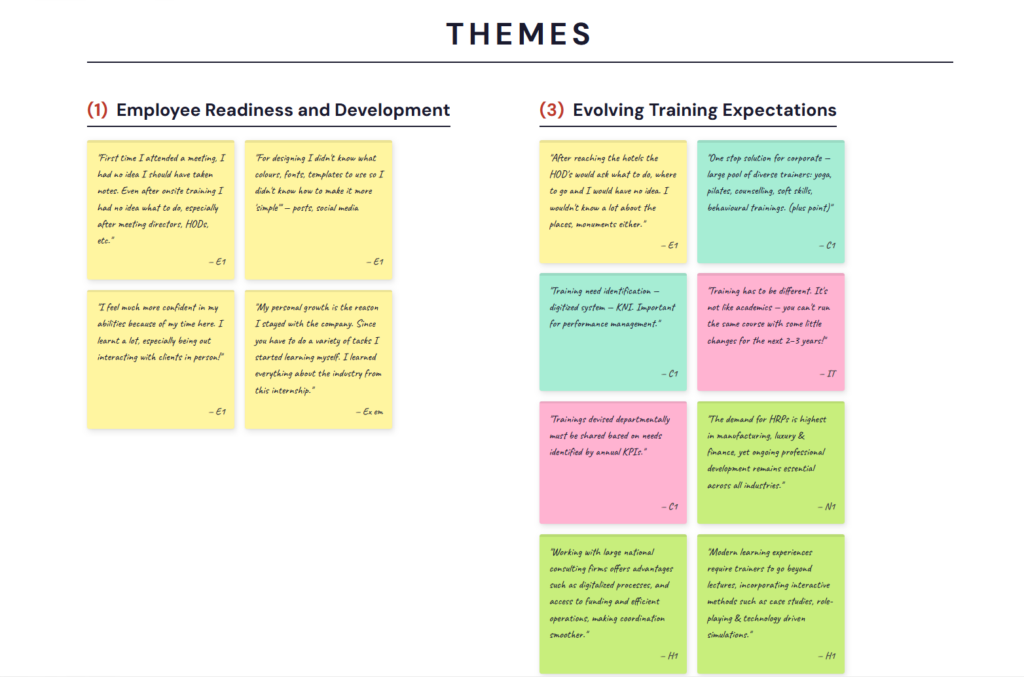
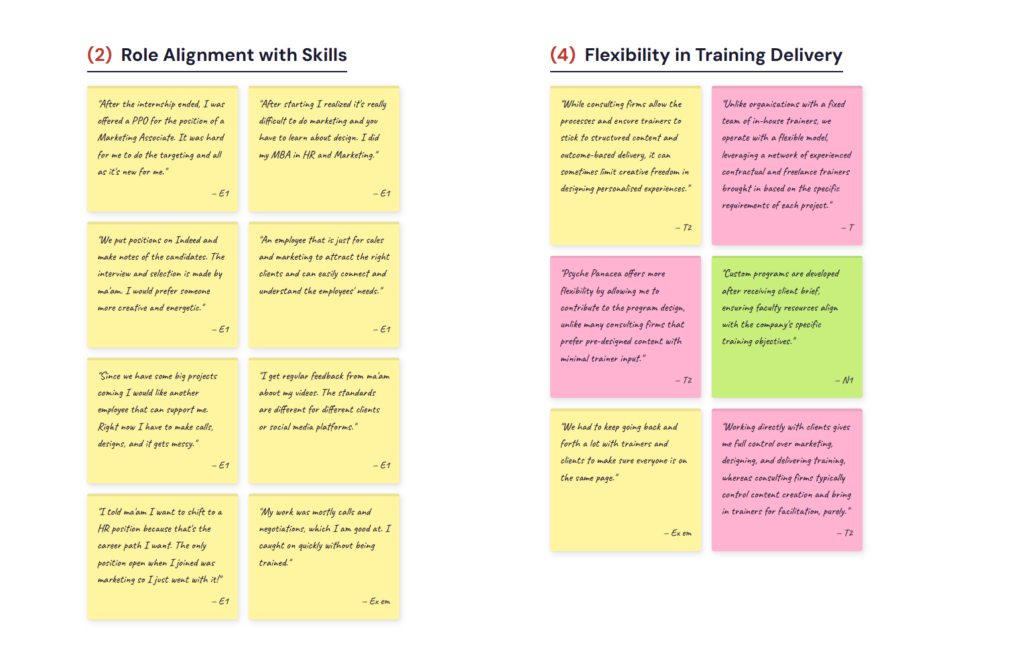
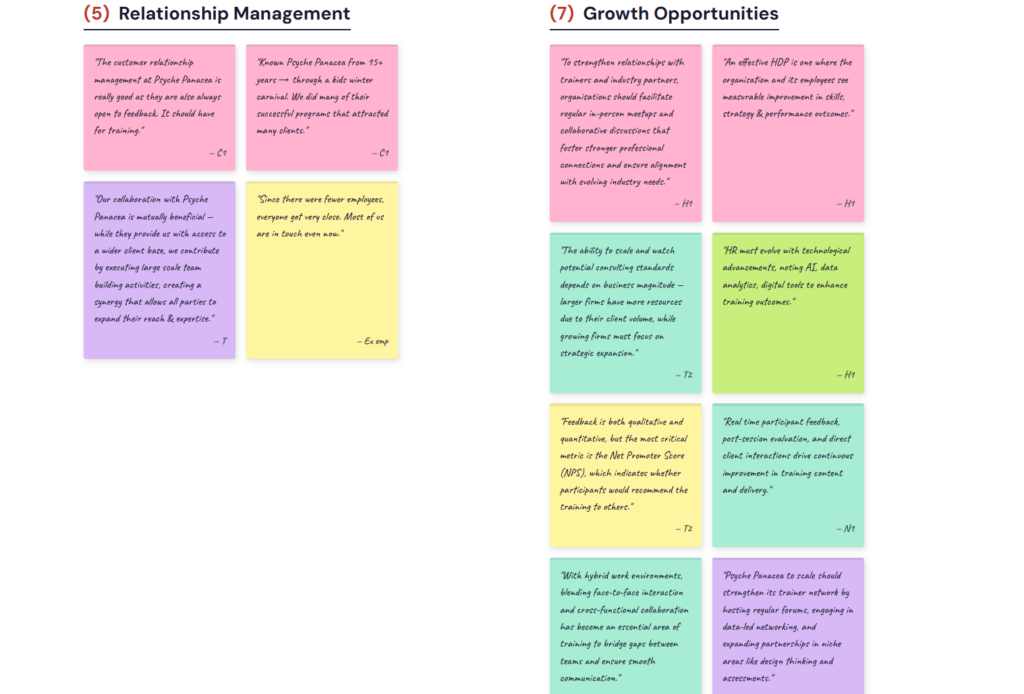
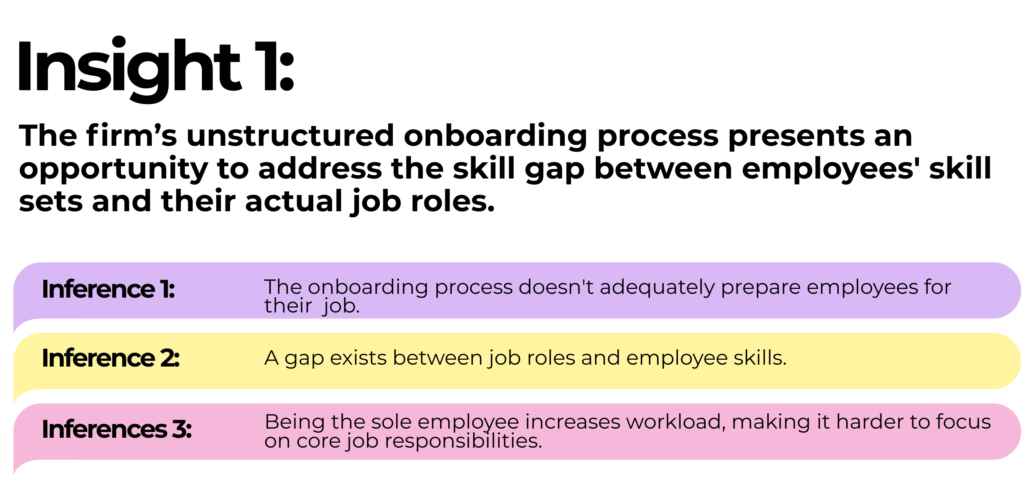
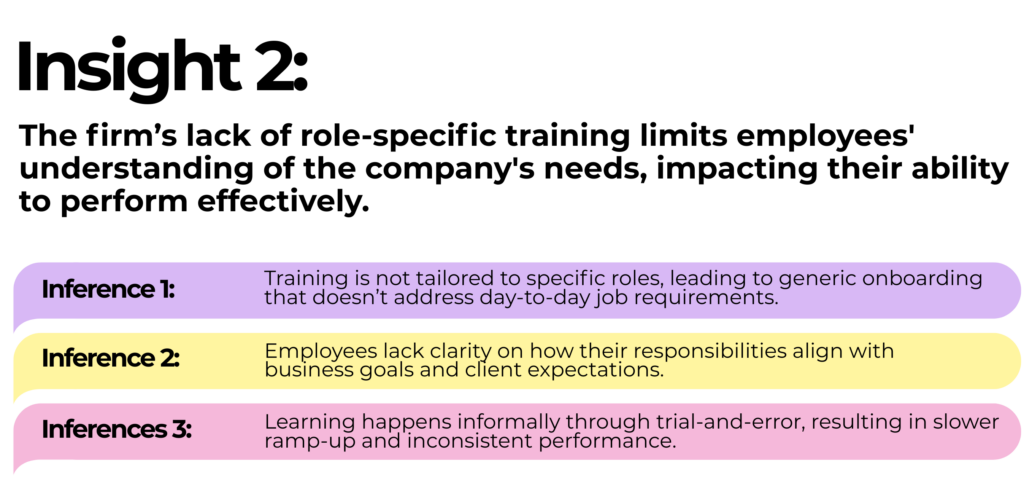
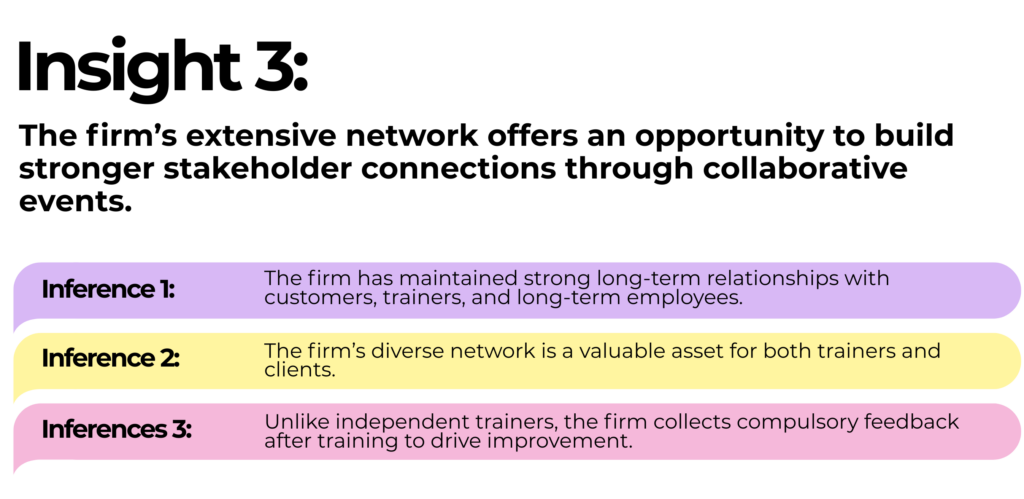
2. Define phase: From the interviews, I organised our findings into themes using affinity clustering, then derived inferences, which were further synthesised into actionable insights. I mapped relationships between key stakeholders and built an end-to-end employee journey across five stages — Search, Screen, Onboard, Experience, and Development — to identify pain points.
3: Develop phase: I generated over 80 ideas by applying SCAMPER and ‘What if’ questioning, allowing for a broad exploration of solutions to address the three key insights.
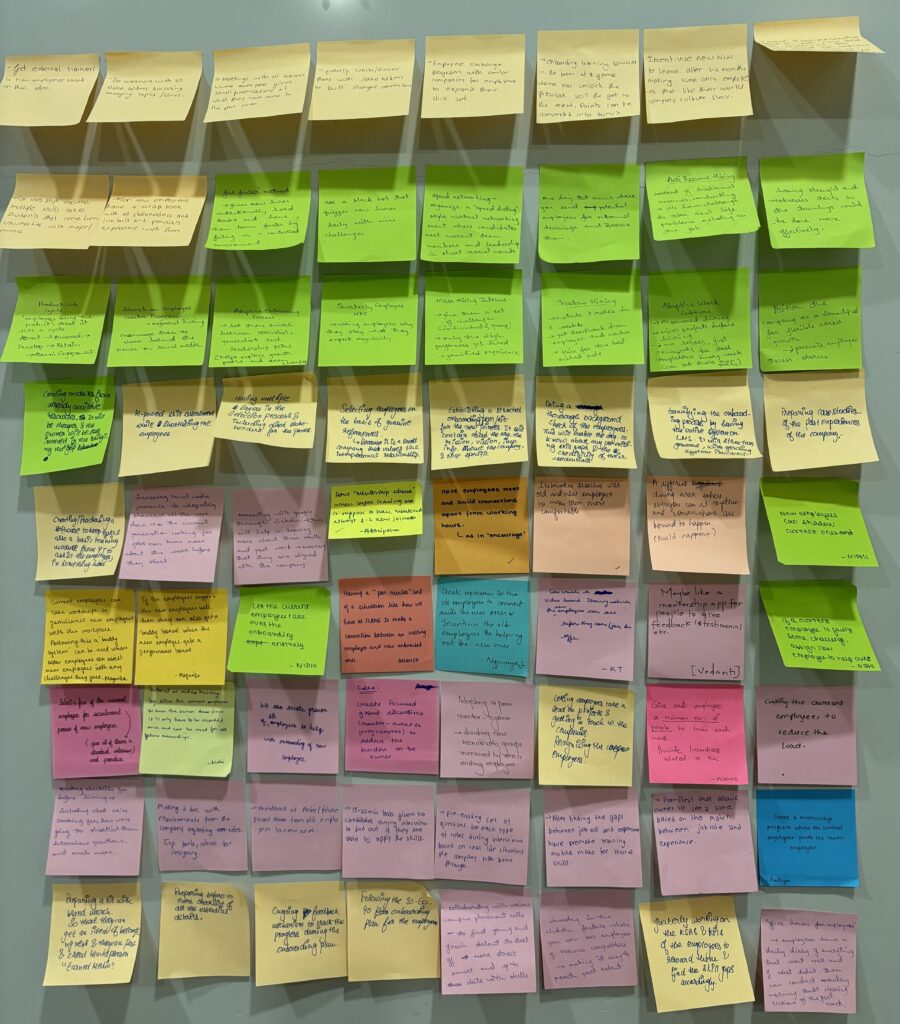
4. Deliver phase: Concepts were evaluated and shortlisted using a business vs. user impact grid and grouped into solution clusters. These were refined into final concepts and strengthened using the Value Proposition Canvas.
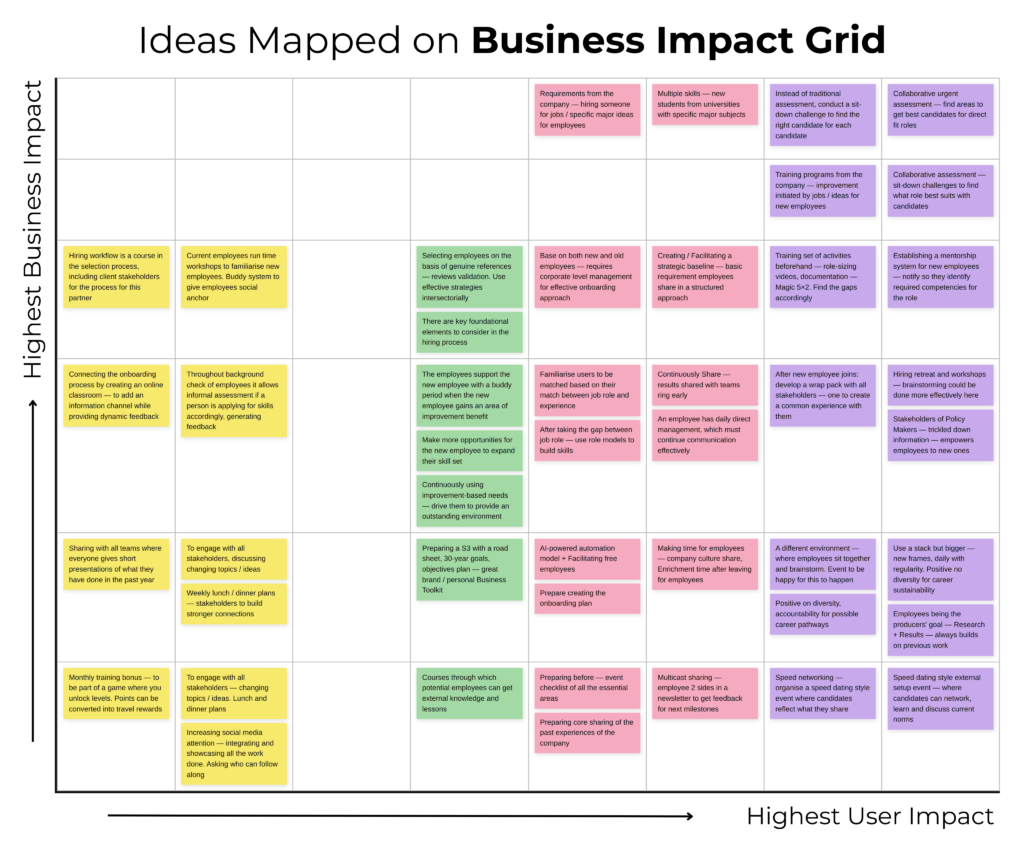
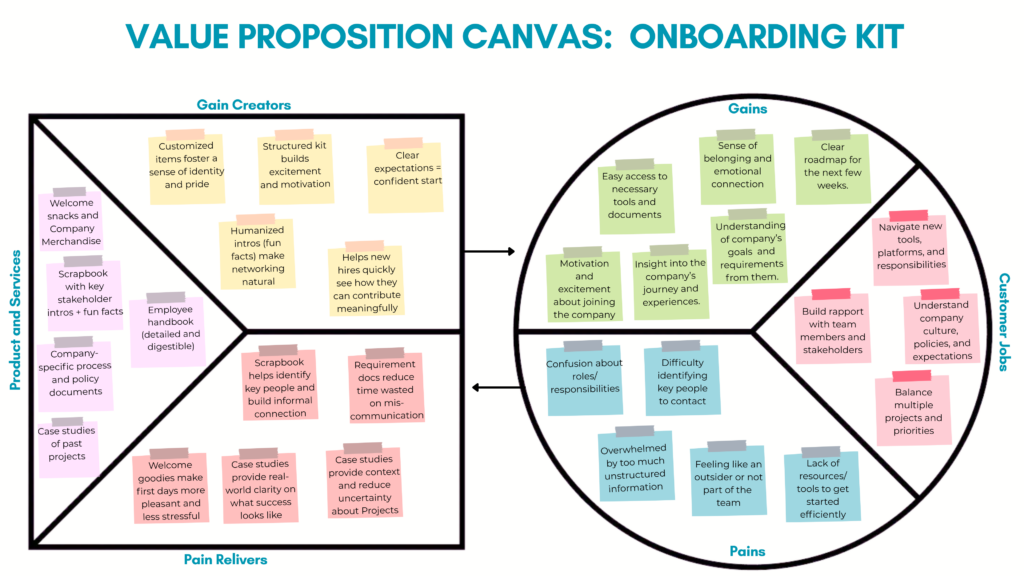
The solutions were iterated through continuous feedback from the business owner, ensuring feasibility and implementation readiness.
The Outcome
An end-to-end employee journey system, introducing interventions across five key stages:
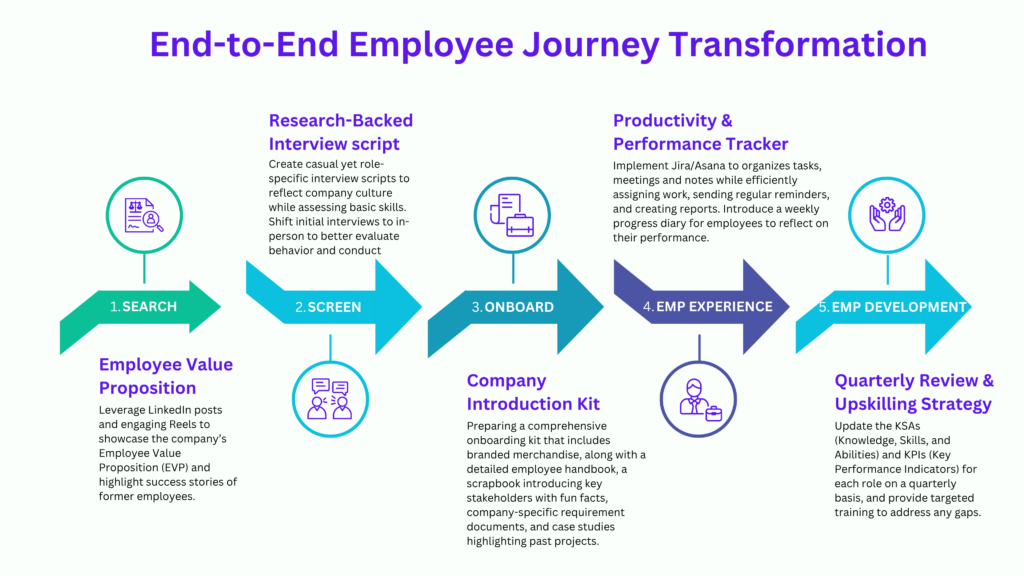
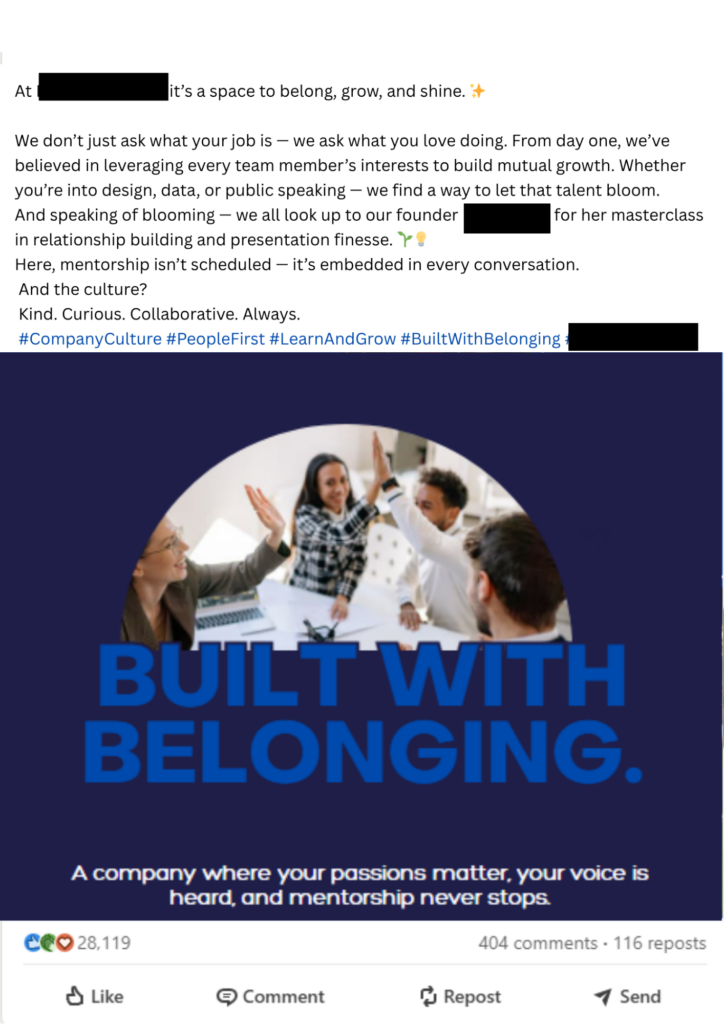
1. Search: Since the company initially had zero LinkedIn presence, I developed an end-to-end content strategy, creating LinkedIn posts and Instagram Reels that showcased the Employee Value Proposition and ex-employee career trajectories to attract candidates.

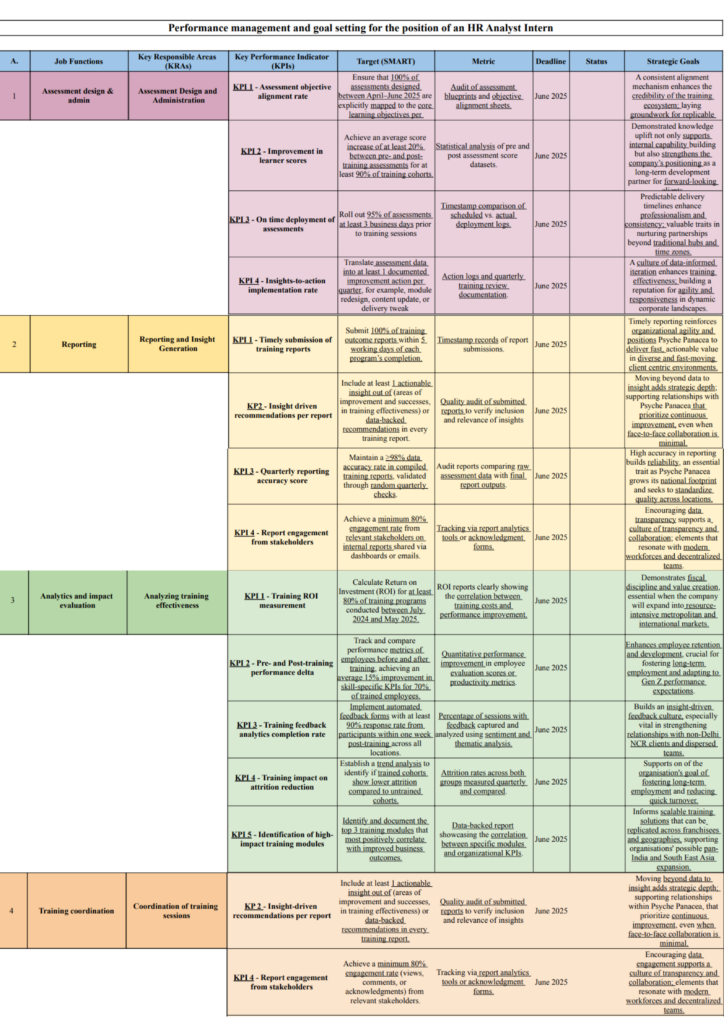
2. Screen: I built a role-specific interview script for the HR Analytics Intern position, aligned to the role’s KRAs and KPIs, with a conversational format designed to assess cultural fit alongside skills. I also recommended shifting initial interviews to in-person.
3. Onboard: I designed a physical Company Introduction Kit — branded merchandise, a stakeholder scrapbook with team introductions and case studies from past projects, a weekly progress diary with targeted reflection prompts, and a Company Requirements Document capturing both the stated policies and the unwritten cultural expectations every new hire needs to know.

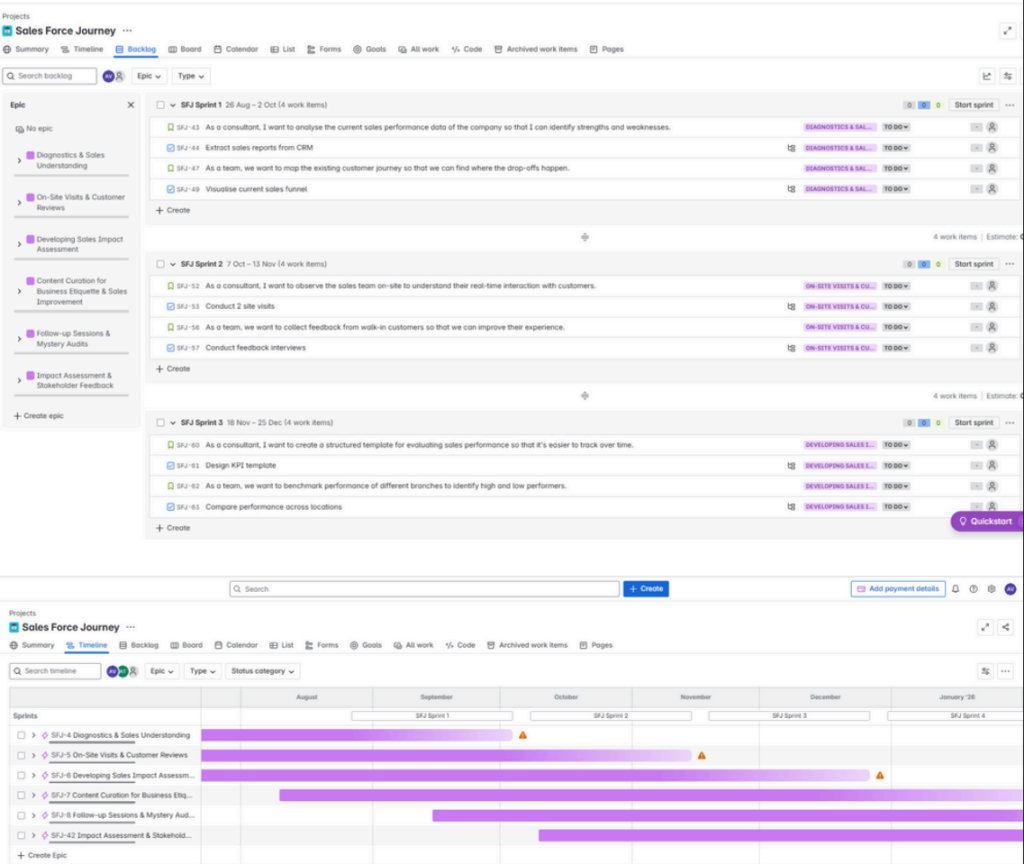
4. Experience: I implemented a Jira project management structure with six defined epics, user stories, Kanban workflow, and Confluence documentation — replacing an informal system of WhatsApp messages and verbal check-ins.
5. Development: I defined KSAs (Knowledge, Skills, Attitudes)and SMART KPIs by role, with quarterly review cycles and a curated free-resource bank for targeted upskilling.
The Outcome
A fully costed, end-to-end employee journey system (₹61,500–₹1,12,800 annually), designed for incremental implementation and scalable growth. Refined through multiple stakeholder feedback cycles, the system strengthens internal capabilities and supports sustainable expansion.